By
By Guest: Teo Gonzalez
Company: Airbyte
Show Name: An Eye on AI
Topics: Cloud Computing
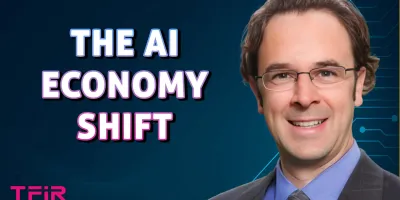
AI workloads are forcing organizations to rethink everything they know about data. In this clip, Teo Gonzalez, Head of AI Business Development at Airbyte, explains why modern AI systems can no longer rely on simple “data dumping.” Instead, they require context-rich, schema-aware, and action-oriented data pipelines. This shift is making AI teams think like data engineers — and pushing data infrastructure to evolve rapidly.
📹 Going on record for 2026? We're recording the TFiR Prediction Series through mid-February. If you have a bold take on where AI Infrastructure, Cloud Native, or Enterprise IT is heading—we want to hear it. [Reserve your slot
As AI becomes central to enterprise strategy, teams can no longer rely on passive data practices. Traditional data infrastructure was built for reporting, analytics, and dashboards. The focus was on collecting data into a warehouse or lakehouse and making it accessible for humans to interpret. But AI systems are not human; they do not infer intent, context, or nuance without explicit guidance. Teo highlights that this has changed the fundamental relationship between AI and data.
Teo notes that historically, teams believed all data needed to be centralized before it could deliver value. But in an AI-driven world, simply placing all data in one location is no longer enough. AI agents need to understand how data overlaps, how objects differ across platforms, and how schema changes affect downstream behavior. For example, a HubSpot CRM object and a Salesforce CRM object may represent similar concepts but have different structures, fields, and metadata. AI systems must understand these differences to act reliably.
This is why context is becoming the new cornerstone of AI-ready data. It’s not just the data itself — it’s how that data relates to other systems and what meaning it carries. Teo describes this as “the context about the context,” emphasizing that teams must go beyond simple ingestion and think deeply about how data intersects across platforms.
This shift has given rise to an unexpected trend: leading AI startups are now thinking like data engineers. These companies may not have come from a data background, but they quickly realize they must adopt data-engineering best practices if they want their LLMs and AI agents to behave correctly. Schema evolution, field masking, metadata enrichment, and data sanitation — once niche concerns — are now essential to building any AI-powered product.
Teo explains that this convergence is natural. AI architecture is designed to take action, not simply report insights. Data infrastructure is making the same transition. In a world where AI agents trigger workflows, make decisions, and support real-time operations, data infrastructure must evolve to support operational, action-oriented behavior. AI cannot operate on static dashboards; it needs dynamic, interconnected datasets that reflect real-world relationships.
In this context, Airbyte’s role becomes clear. The platform was built to unify and move data, but now it must also help teams understand how that data aligns across systems. As AI workloads grow more complex, organizations need tools that can detect schema differences, standardize formats, and ensure data moves with the right context. Airbyte’s ability to handle connector maintenance at scale, monitor schema changes, and provide customizable transformations positions it as a core enabler of AI infrastructure.
Teo also highlights how the rapid evolution of AI is driving urgency. AI tools, frameworks, and architectures shift weekly, and teams need data infrastructure that can adapt just as quickly. Static pipelines simply cannot keep pace. AI-ready data infrastructure must be flexible, extensible, and capable of supporting both bulk ingestion and targeted retrieval for specific agent-driven tasks.
Another key insight from Teo is the growing overlap between data workloads and AI workloads. As organizations invest more heavily in AI, the line between data engineering and AI engineering blurs. Developers working on AI applications must think about schema drift, metadata gaps, sensitive field masking, and the implications of new fields appearing in a source system. Conversely, data engineers must now think about how their pipelines influence model behavior downstream.
This merging of disciplines signals a major evolution: data infrastructure is no longer separate from AI infrastructure. They are becoming one and the same — two sides of the same system that must operate cohesively. AI systems cannot deliver value without strong data foundations, and data systems increasingly must be designed with AI consumption in mind.
Teo believes that as AI continues to mature, we will see data infrastructure shift from supporting human analytics to supporting automated, action-oriented systems. This future requires data pipelines that are not only reliable but deeply contextual and capable of supplying the right information at the right moment. AI agents must be fed structured, meaningful data streams that reflect changing schemas, user interactions, and real-time events.
This clip captures the essence of a major industry transformation: AI is rewriting the rules of data. Organizations that continue treating AI as an add-on to analytics will struggle. Those that build action-oriented, context-aware data infrastructure will unlock the true potential of AI systems.