By
By Guest: Ari Weil (LinkedIn)
Company: Akamai
Show Name: An Eye on AI
Topic: Edge Computing
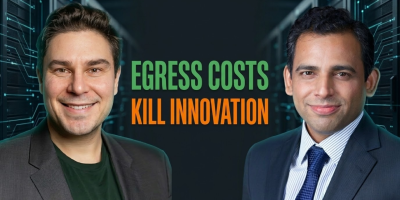
Enterprises are under pressure to deliver real-time AI experiences, but centralized compute costs, latency, and security trade-offs often make that goal unsustainable. The challenge isn’t ambition — it’s architecture. In this clip, Ari Weil, VP of Product Marketing at Akamai, explains how Akamai Inference Cloud bridges the gap between centralized AI factories and edge environments, enabling enterprises to scale AI without runaway costs.
Why centralized AI economics break down
Many organizations start their AI journey with centralized infrastructure. Over time, costs climb as inference requests increase, data moves across regions, and egress fees pile up. Latency grows, security risks expand, and the business case weakens.
Ari explains that real-time AI requires a more intelligent approach — one that evaluates where inference should run based on latency, cost, and security, not convenience.
Model routing and decision routing in practice
Akamai Inference Cloud applies model routing and decision routing to direct requests to the most appropriate infrastructure. Instead of sending every prompt back to a centralized model, workloads are routed to the right location and the right model for the job.
This approach allows enterprises to prioritize what matters most for each use case. Some interactions demand speed. Others require tighter security controls. Some must optimize for cost. Routing decisions are made dynamically, in real time.
Reducing cost with semantic caching
One of the most immediate cost-saving mechanisms Ari highlights is semantic caching. If a similar question or request has already been processed, Akamai can deliver an instant response without re-querying a centralized AI factory.
This reduces compute consumption, cuts latency, and minimizes unnecessary data movement. It also reduces exposure by limiting repeated calls across networks and regions.
Open source, multi-cloud, and practical flexibility
Akamai’s platform is built on open source, with a strong emphasis on multi-cloud portability. Enterprises are not forced into a single provider or architecture. Instead, AI workloads can move where they make the most sense economically and operationally.
Competitive pricing and generous egress policies further improve the cost equation, making it viable to run AI workloads closer to users without hidden penalties.
From great ideas to real-world deployment
Ari also points to the importance of developer enablement. With its application platform built on Kubernetes and Linux, Akamai enables turnkey AI deployments that reduce operational toil and speed time to market.
This lowers the barrier for teams that have strong ideas but lack the architectural resources to build and scale AI systems from scratch.
What this means for enterprise leaders
The takeaway is clear. Real-time AI cannot be powered by centralized infrastructure alone. Sustainable AI requires intelligent routing, edge inference, and economic discipline.
Akamai Inference Cloud reflects a shift toward pragmatic AI architectures — ones that balance performance, security, and cost so enterprises can scale AI with confidence over the next several years.