By
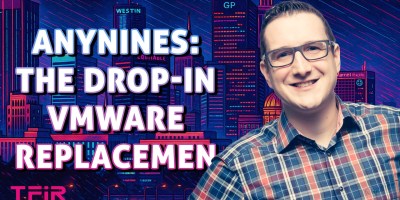
By There is a growing concern among customers of VMware products post-Broadcom acquisition. In this episode, Rob Hirschfeld, CEO and Co-Founder of RackN, talks about the options available to customers.
Concerns and reactions to Broadcom’s acquisition of VMware, including resistance from companies and challenges with replacing VMware products
📹 Going on record for 2026? We're recording the TFiR Prediction Series through mid-February. If you have a bold take on where AI Infrastructure, Cloud Native, or Enterprise IT is heading—we want to hear it. [Reserve your slot
- Hirschfeld: Broadcom acquisition concerns lead to resistance in the market.
- Hirschfeld: Companies struggling to remove VMware due to lack of inventory and knowledge.
- People looking at replacement of VMware offerings, but not necessarily reacting to fees or pricing.
VMware’s market dominance and the need for diversity in the virtualization layer
- Hirschfeld: Organizations may be entangled in VMware infrastructure, making it difficult to swap virtual managers.
- Hirschfeld emphasizes VMware’s strengths and weaknesses, addressing market pressures and customer needs.
- Hirschfeld: VMware acquisition adds incentive for customers to improve processes.
- Hirschfeld: Customers should treat this as a once-in-a-lifetime opportunity to reevaluate and improve processes.
Evaluating workloads for virtualization migration
- Hirschfeld suggests companies identify use cases for moving away from VMware and adding abstraction layers to avoid vendor lock-in.
- Hirschfeld advises companies to pick hypervisors or eliminate them altogether based on use cases, rather than expecting exclusive use of a single hypervisor.
- Hirschfeld suggests customers score applications based on 10 criteria, including skill, team skills, and platform readiness.
- Hirschfeld emphasizes the importance of understanding the right platform for each application and workload.
Guest: Rob Hirschfeld (LinkedIn)
Company: RackN (Twitter)
Show: Let’s Talk