By
By 
Author: Chris Gruel, Senior Solutions Architect, Akeyless
Bio: Chris Gruel is an enterprise technology veteran with over 20 years of experience. The majority of his career was as a software engineer for the largest home improvement retailer in the US. During his tenure, he led their digital transformation and was integral in the company’s move towards containerization. Now at Akeyless, his mission is to empower organizations to keep their secrets secure.
The shift towards cloud environments has significantly reshaped how organizations manage and secure their digital assets. However, not all systems and data can transition to the cloud, leaving a gap in security practices for on-premises and bare metal resources. An approach using Universal Identity addresses the critical need for securing non-cloud environments, including legacy systems, bare metal deployments, and external partner integrations, ensuring that every aspect of an organization’s infrastructure is protected. In this article we explore the challenge, the solution, and several key use cases and best practices.
The Challenge of Non-Cloud Environments
Despite the cloud’s growing dominance, certain scenarios necessitate on-premises solutions. These include:
- Legacy Systems: Many organizations operate critical applications and systems that cannot be migrated to the cloud due to complexity, cost, or regulatory constraints.
- Bare Metal Requirements: Specific use cases demand the performance and control provided by bare metal infrastructure, such as localized Large Language Models (LLMs) for AI-driven applications.
- Partner Ecosystems: Some external partners may rely on traditional computing environments, necessitating secure integration with modern cloud-based systems.
The common thread among these scenarios is the frequent reliance on static credentials, which poses significant security risks. Static credentials, if compromised, provide attackers with prolonged unauthorized access, making them a lucrative target for cyber threats.
Auto-Rotation with Universal Identity
Universal Identity offers a robust solution to the limitations of static credentials in non-cloud environments. This innovative approach provides several key benefits:
- Ephemeral: Credentials are short-lived, reducing the window of opportunity for unauthorized access.
- Customizable: Organizations can tailor the lifespan and permissions of credentials to fit specific security needs.
- Inheritable: Child tokens can be generated with delegated permissions, allowing for fine-grained access control.
How It Works
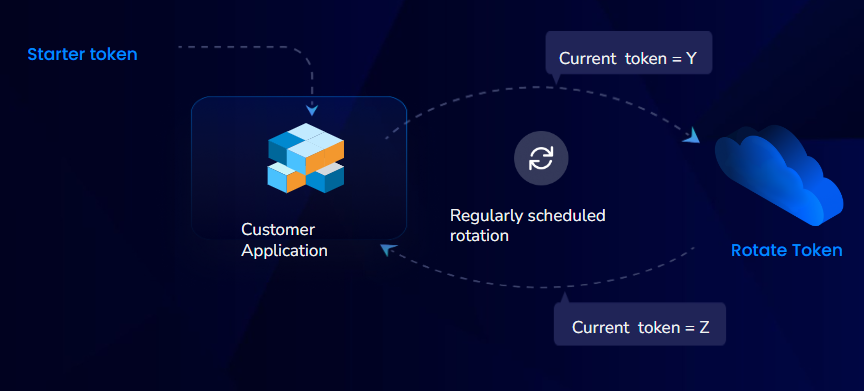
Universal Identity automates the generation and rotation of credentials, ensuring they are ephemeral and continuously refreshed. This process involves:
- Generating a Universal ID Token: A foundational token is created, serving as the starting point for secure interactions.
- Automatic Refresh: The token is set to automatically renew at specified intervals, with the previous token becoming invalid upon renewal.
- Delegating Permissions: Through child tokens, specific permissions can be assigned, enabling secure, scoped access to resources.
Use Cases and Best Practices
Universal Identity introduces a secure and efficient method for managing credentials across a variety of use cases, ensuring that the organization’s digital footprint is protected. Let’s delve into several of the more common use cases to understand how Universal Identity provides a robust solution to each.
Mobile App Marketplace Signing Key
Large enterprises often manage mobile applications that require regular updates and new releases. Each update must be signed with a digital key to assure its authenticity and integrity before being distributed through app marketplaces like Apple’s App Store or Google Play. The static nature of traditional signing keys poses a significant security risk; if compromised, malicious actors could distribute harmful updates under the guise of legitimate software.
By leveraging Universal Identity, enterprises can dynamically rotate their app signing keys at short intervals, such as every 10 minutes. This approach drastically reduces the risk window if a key is compromised and ensures that any potential breach is quickly contained. Moreover, the ability to receive immediate notifications if a credential is compromised enables rapid response, further enhancing the security of the mobile application distribution process.
Encryption Key Exchange with Partners
Businesses frequently need to share sensitive data with partners, requiring encryption to ensure confidentiality. The traditional methods of exchanging encryption keys, such as via email or in-person meetings, are fraught with security vulnerabilities and operational inefficiencies. These practices not only risk the exposure of the encryption key but also are cumbersome and fail to meet the agility required in modern business operations.
Universal Identity streamlines this process by allowing partners to authenticate and access the necessary encryption keys through the platform without ever having direct access to the key itself. This method ensures that the key remains secure while enabling seamless and secure data sharing. It eliminates the need for risky key exchange methods, replacing them with a secure, automated process that ensures only authorized partners can decrypt the shared information.
Monolithic or Proprietary Applications On-Prem
Many organizations operate critical legacy applications or proprietary systems that cannot be moved to the cloud due to various constraints, such as regulatory compliance, performance requirements, or the complexity of migration. These systems often rely on static credentials for access and authentication, which presents a significant security risk. In the event of credential compromise, the lack of credential rotation means attackers can maintain unauthorized access for extended periods, potentially leading to data breaches or other security incidents.
Implementing Universal Identity for these applications allows organizations to introduce dynamic, rotating credentials even in environments that traditionally relied on static access keys. This approach significantly enhances security by ensuring credentials are ephemeral, greatly reducing the usefulness of any compromised key. Additionally, Universal Identity’s capability to issue immediate notifications of credential compromise empowers organizations to respond swiftly, further mitigating potential security risks. This solution brings much-needed modern security practices to legacy and proprietary systems.
Conclusion: The Future Is Ephemeral
Universal Identity represents a significant advancement in the fight against cyber threats in non-cloud environments. By embracing auto-rotating credentials, organizations can effectively safeguard legacy systems, bare metal deployments, and external partnerships. The shift away from static credentials towards a more dynamic, secure approach is not just beneficial—it’s essential for the modern cybersecurity landscape. Universal Identity can lead the charge towards making the digital world safer for everyone.
To learn more about Kubernetes and the cloud native ecosystem, join us at KubeCon + CloudNativeCon Europe in Paris from March 19-22.