By
By Guest: Greg Tucker (LinkedIn)
Company: SIOS Technology
Show: Data Driven
Topics: High Availability, Cloud Computing
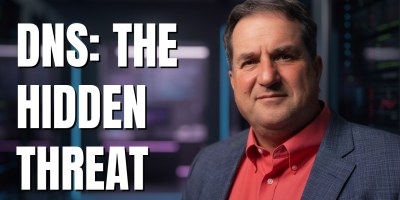
As organizations continue to migrate from traditional data centers to hybrid and multi-cloud environments, one fundamental truth remains: uptime still matters. The shift has transformed how infrastructure teams operate, forcing them to think beyond hardware and redundancy toward strategy, automation, and proactive resilience. Greg Tucker, Senior Product (Windows) Support Engineer at SIOS Technology, joined TFiR to unpack what this evolution means for teams responsible for mission-critical systems.
For decades, IT teams built their reliability around physical control — servers, storage, and networks they could see and touch. “Many organizations, whether small, medium or large, still rely on that comfort and familiarity of managing their on-prem platforms,” Tucker explained. “But the landscape is shifting. More and more businesses are moving to trusted cloud providers to offload the hassle of managing and maintaining infrastructure.”
That move changes everything. In the cloud, teams can no longer rely solely on traditional clustering or failover mechanisms. They must reimagine high availability (HA) as a distributed, policy-driven discipline spanning multiple availability zones, providers, and workloads. According to Tucker, this shift allows infrastructure professionals to refocus their energy on what matters most: delivering value to their teams and customers instead of firefighting uptime issues.
The Rise of Multi-Cloud HA
Few trends are reshaping modern IT like multi-cloud adoption. It’s no longer rare for enterprises to distribute workloads across AWS, Azure, and Google Cloud simultaneously. The reasons are both technical and strategic — from redundancy and cost optimization to vendor leverage.
“Multi-cloud makes a lot of sense today,” Tucker said. “It drives efficiency, scalability, and resilience. You get risk mitigation, operational redundancy, and even better cost control since multiple providers create more opportunities to negotiate price.”
He pointed out that the benefits aren’t just operational. Leadership teams increasingly see multi-cloud strategies as enablers of innovation. The ability to experiment with different environments — say, testing workloads on Azure while running production in AWS — supports agility and strategic growth. For HA and DR engineers, this means designing systems that are not only robust but also portable and adaptable.
From Break-Fix to Strategy
Tucker emphasized that infrastructure roles are evolving rapidly. What was once a reactive, support-heavy discipline is now a critical part of strategic decision-making. “Instead of always being in a break-fix mode, teams are helping make decisions about scalability, security, performance, and efficiency,” he noted.
That evolution requires tools and solutions that simplify complexity rather than add to it. Modern HA systems must account for distributed architectures, containerization, and automated orchestration while maintaining clarity and control. SIOS, known for its HA and DR solutions across cloud and hybrid environments, focuses precisely on that — giving organizations a foundation to maintain reliability without needing to over-engineer.
Balancing Cost and Resilience
Every CIO faces the same challenge: how to ensure availability without overspending. Tucker believes the key is flexibility. “By having multiple vendors in your toolkit, you can cherry-pick the best offerings to suit your needs — whether that’s maximizing performance, optimizing cost, or staying agile in the face of change,” he said.
This pragmatic approach reflects a broader trend. Enterprises are no longer chasing the “perfect” HA setup; they’re aiming for the most effective balance between protection, simplicity, and scalability. As cloud costs continue to rise, this balance becomes even more critical.
AI and Automation in HA
Artificial intelligence and machine learning are also finding their way into high availability strategies. Tucker sees them as powerful tools for optimization — but not replacements for human oversight. “AI and machine learning help reduce risk, but they can’t totally eliminate it,” he cautioned. “Reliable data, security, and robust infrastructure remain essential. Human oversight still matters.”
He explained that automation enables teams to move faster, spot anomalies early, and prevent downtime before it cascades into outages. However, even the smartest systems must be grounded in solid architecture and good operational discipline. The best outcomes come from combining automation with experience — using AI as a force multiplier for human expertise.
Early Warning Signals
When asked about the red flags that indicate a weak HA setup, Tucker didn’t hesitate. “If your help desk is constantly getting tickets about slow performance or outages, that’s a signal,” he said. “Even small issues, when they start piling up, can lead to major failures.”
The key, he explained, is to move from reactive monitoring to proactive detection. Organizations should continuously test failover scenarios, monitor cross-region latency, and validate replication integrity. Doing so builds confidence and trust — both internally and with customers who expect four or five nines of uptime.
The Road Ahead
Looking ahead, Tucker predicts that the HA of the future will be “invisible” to end users. “From an end-user perspective, they won’t notice anything because their applications will always be up and running,” he said. “For the people managing infrastructure, everything will be scalable and on demand. Automation and serverless will make most of these operations seamless.”
Legacy processes that once required manual intervention will fade into the background, replaced by intelligent, self-correcting systems. What remains constant is the mission: ensuring business continuity through resilience and smart architecture.
In an era where downtime can cost millions, Tucker’s insights underscore a simple truth: high availability is no longer just a feature — it’s a mindset. Teams that treat it as an ongoing practice, blending automation, multi-cloud flexibility, and human judgment, will be best positioned to thrive in the hybrid future.