By
By Organizations are expected to increasingly adopt composable platforms to enhance vendor flexibility throughout 2025. It is also predicted that infrastructure management (IM) will shift toward converged workloads that integrate virtual machines (VM), containers, microservices, and legacy applications. Kubernetes will continue to play a significant role as the common control plane, enabling seamless workload orchestration across cloud, on-premise, and edge environments. Artificial intelligence (AI) is set to evolve, focusing on smaller, optimized models designed for real-time decision-making at the edge. However, businesses will continue to face challenges, particularly in cost optimization and resource management.
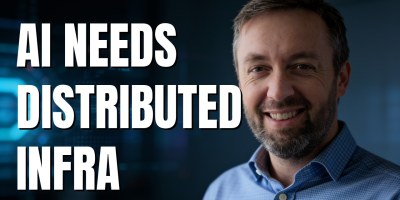
Stephen Frassetti, Field CTO from Mirantis, shares his 2025 predictions, noting that organizations are recognizing the value of flexibility in their technology stacks. “We’re seeing a lot of customers right now that are shifting towards composable platforms, where they’re increasingly recognizing the importance of being flexible within the technologies they choose, within their stack,” he explains. The rise of composable platforms will allow businesses to select best-of-breed technologies, reducing tech debt and improving operational efficiency. Running multiple types of workloads within a unified infrastructure will further simplify operations, minimizing complexity and boosting scalability.
Frassetti discusses how Kubernetes’ role is expected to expand further as companies seek a standardized orchestration layer across diverse environments. Improved migration tools allow businesses to move workloads between VMs and containers more easily. This enables a more seamless hybrid and multi-cloud strategy, which can help companies consolidate resources while improving agility in workload management.
AI adoption is another significant area set to transform in 2025, particularly at the edge. Frassetti predicts a move toward smaller, more efficient AI models capable of real-time data processing. This approach aims to reduce the resource burden associated with large-scale AI and machine learning deployments. Frassetti believes this will drive increased adoption of AI-powered edge devices, particularly in industries reliant on the Internet of Things (IoT) and real-time decision-making.
Despite these advancements, cost optimization will likely still be a key challenge for businesses. Frassetti explains that running AI workloads and hyper-scale cloud operations comes with significant financial demands. Organizations need to work to strategically allocate budgets to effectively manage these financial demands. Securing the right expertise to manage these complex systems will also be critical in 2025, especially since resource availability remains a pressing concern.
Mirantis’ focus in 2025 will be on continuing to support enterprise clients and the open source community. The company has recently launched Mirantis Rockoon, a Kubernetes controller designed to simplify operational tasks, and k0rdent, an open source distributed container management environment. Frassetti discusses how these innovations aim to streamline Kubernetes cluster management across multiple infrastructures, underscoring Mirantis’ commitment to open source solutions and enterprise support.
Guest: Stephen Frassetti
Company: Mirantis
Show: 2025 Prediction Series
This summary was written by Emily Nicholls.