By
By 
Kentik, the network intelligence platform, today announced the launch of Cause Analysis, an AI-powered feature that automatically identifies and explains the reasons behind network performance issues such as slow speeds, dropped connections, and service disruptions.
Designed to assist SREs and platform engineers, Cause Analysis allows users to investigate anomalies like traffic spikes or degradation—without requiring deep networking expertise.
“Over the past few years, we’ve seen the rise of the SRE and platform engineer within modern enterprises, but network experts are far and few between,” said Avi Freedman, CEO and Co-Founder of Kentik. “When you need to diagnose a network issue impacting customers, Cause Analysis can pinpoint changes impacting customers in seconds and explain in plain language what it could take even a network expert many query iterations to diagnose and understand.”
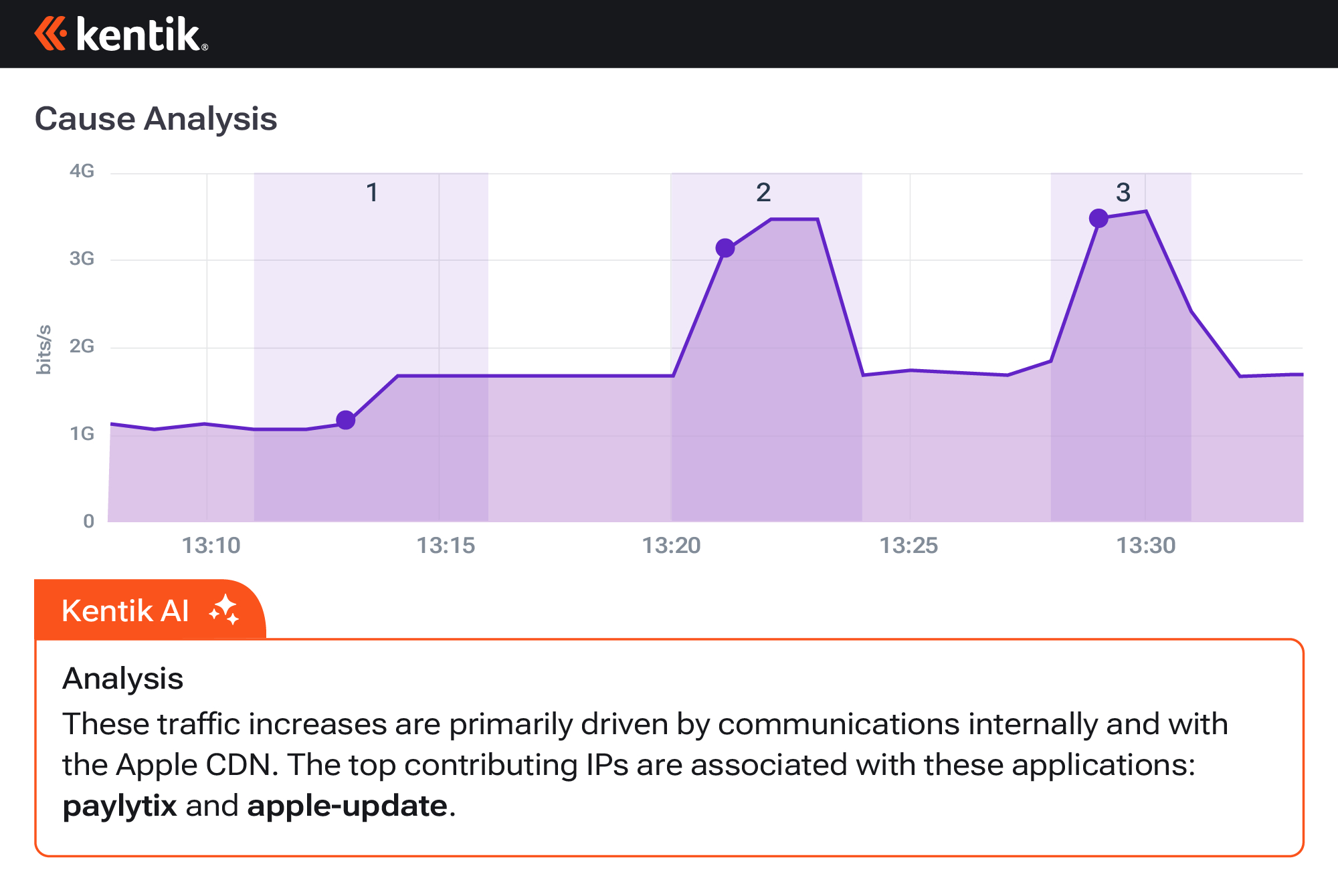
Cause Analysis is a new AI-powered capability that automatically identifies and explains the cause of network traffic issues and anomalies.
Leveraging proprietary algorithms, the feature detects traffic shifts and problem areas in real time. It then uses customers’ preferred large language models (LLMs) to generate clear, natural language explanations of the root cause.
Developed in collaboration with customers, this new capability goes beyond traditional alert noise reduction by providing actionable, contextual insights into real-time network events—accelerating response and minimizing downtime in complex environments.
“Kentik’s new Cause Analysis feature has greatly enhanced our ability to quickly and clearly understand what’s driving network traffic. Whether we’re troubleshooting specific issues or conducting routine checks, it provides rapid, actionable insights into traffic patterns and sources,” said Chris Wilkison, Principal Network Engineer at Bluepeak. “By integrating it into our daily workflows, we’ve streamlined complex troubleshooting and significantly reduced the time required to maintain network health and performance.”